christine mcvie wasn’t the loudest voice in Fleetwood Mac — but her whisper changed rock history. While Stevie Nicks spun mysticism and Lindsey Buckingham burned with electric tension, McVie composed the emotional core of the band’s most iconic era. Her piano keys carried confessions, heartbreak, faith, and healing that still resonate in every gym playlist, yoga session, and late-night drive today.
The Quiet Force: How Christine McVie’s Songwriting Shaped Fleetwood Mac’s Soul
| Attribute | Information |
|---|---|
| Full Name | Christine Perfect |
| Birth Name | Christine Anne Perfect |
| Born | July 12, 1943, Greenodd, Lancashire, England |
| Died | November 30, 2022, Naples, Florida, USA (aged 79) |
| Occupation | Singer, songwriter, keyboardist |
| Genre | Rock, pop, blues, soft rock |
| Instruments | Vocals, keyboards, piano |
| Associated Acts | Fleetwood Mac, Chicken Shack |
| Joined Fleetwood Mac | 1970 (officially a member from 1971) |
| Notable Bands | Chicken Shack (1967–1969), Fleetwood Mac (1970–1998, 1997 reunion, 2014–2018) |
| Key Contributions | Co-lead vocals, keyboardist, songwriter |
| Famous Songs Written | “Don’t Stop”, “You Make Loving Fun”, “Everywhere”, “Little Lies”, “Hold Me”, “Over & Over” |
| Signature Style | Melodic keyboard arrangements, warm contralto vocals, accessible pop-rock compositions |
| Awards | Rock and Roll Hall of Fame (1998, with Fleetwood Mac), Ivor Novello Award |
| Solo Albums | *Christine Perfect* (1970), *Christine McVie* (1984), *In the Meantime* (2004) |
| Legacy | One of rock’s most influential keyboardists and female songwriters; pivotal in shaping Fleetwood Mac’s 1970s–80s sound |
Long before Fleetwood Mac became a household name, christine mcvie was the quiet architect behind its most enduring melodies. Unlike the volatile energy between Stevie and Lindsey, McVie wrote with calm precision — her songs often emerging fully formed in 20 minutes, delivered with emotional clarity that women still crave in music today. Tracks like “Don’t Stop,” “Over My Head,” and “Say You Love Me” weren’t just hits — they were emotional survival tools for generations of women navigating love, work, and self-worth.
Her influence extended beyond songwriting — she normalized female presence in rock’s male-dominated arenas by simply being present, composed, and indispensable. While others wore drama like jewelry, McVie showed strength in stillness — a lesson in confidence that still hits harder than any high note. As fans stream Rumours during morning cardio or stress-baking sessions, they’re tapping into her legacy of resilience dressed as melody — something few recognize but everyone feels.
McVie’s songs became soundtracks for personal transformation — proof you don’t need fireworks to spark a revolution. Her journey mirrors what we preach at My Fit Magazine: real change is built quietly, deliberately, and with heart. Just like a consistent workout plan or mindful nutrition — her music was sustainable power, not fleeting intensity.
“You Make Loving Fun” — A Secret Love Letter Hidden in Plain Sight
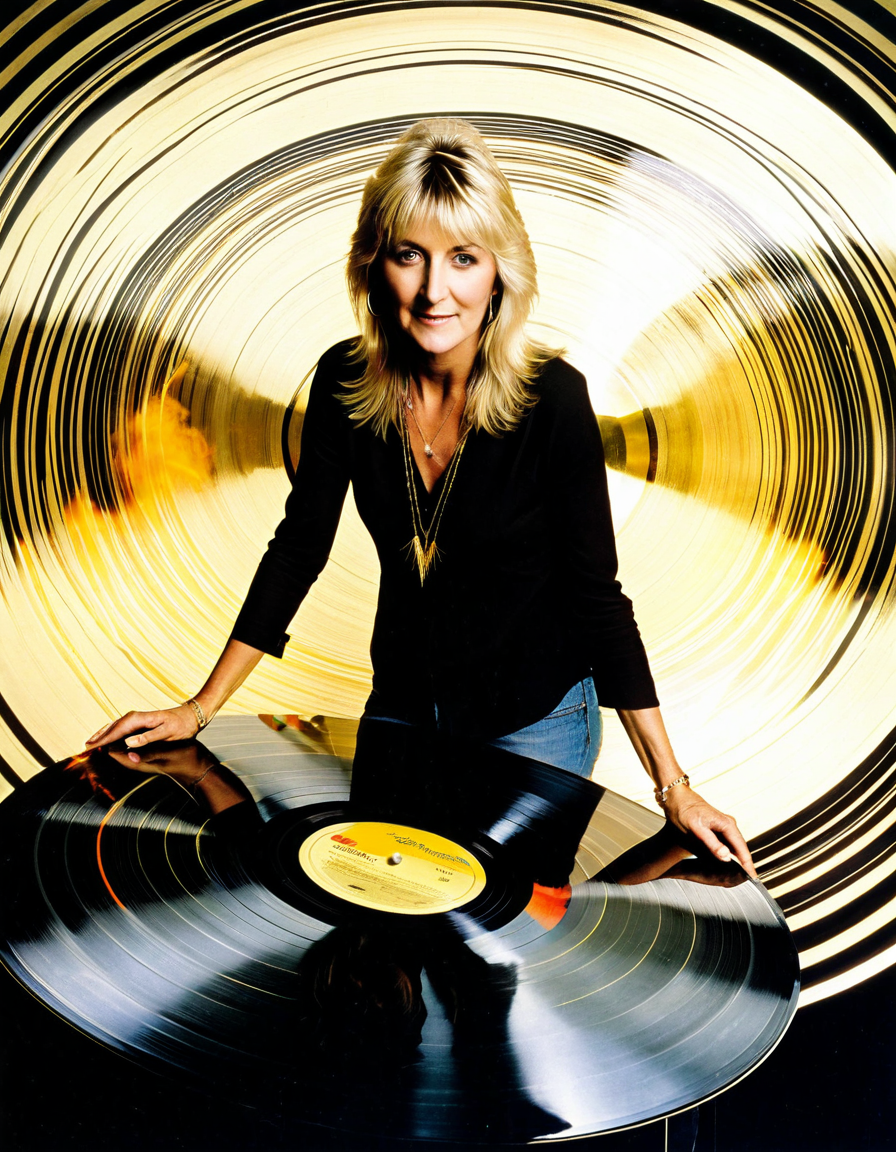
Few songs in Fleetwood Mac’s catalog shimmer with such deceptive joy as “You Make Loving Fun,” but behind its buoyant melody was one of rock’s most scandalous confessions. Officially released on Rumours in 1977, the track was McVie’s musical nod to Curt Bechtolt, Fleetwood Mac’s lighting director, whom she began secretly seeing during the band’s most turbulent era. While the world believed the album chronicled Stevie and Lindsey’s breakup, McVie was quietly falling for someone new — and turning it into sonic gold.
She sang of relief, gratitude, and rediscovered joy — lines like “I’ve been loving you too long to stop now” weren’t just poetic. They were a declaration of self-liberation. Unlike Stevie’s mystical love and Lindsey’s bitterness, McVie’s lyrics celebrated emotional honesty through joy, a radical act in a band drowning in pain. This subtle rebellion through positivity made her an unsung pioneer of emotional fitness in music.
That track, still a staple on classic rock radio and curated Spotify workouts, embodies the idea that healing isn’t always loud — sometimes, it sounds like a Hammond B-3 organ and a woman singing about finding happiness again. Her message? You can rebuild your life — and your heart — without screaming. As women today use music to power through runs or overcome divorce, McVie’s quiet triumph remains a blueprint.
Was Rumours the Soundtrack to Her Silent Rebellion?
While Rumours is mythologized as a chronicle of breakups and breakdowns, it was also the soundtrack to Christine McVie’s personal reinvention. As her marriage to bassist John McVie crumbled, most assumed she’d fade into the background — but instead, she poured her healing into songwriting, crafting six of the 11 tracks on the album. Songs like “Oh Daddy” and “You Make Loving Fun” weren’t just reflections — they were psychological lifelines, tools of emotional recovery before therapy was mainstream.
She transformed private pain into public power — a move modern women emulate daily, whether launching businesses post-divorce or building fitness routines after loss. “Don’t Stop” — written about her separation — became an anthem not of denial, but of forward momentum. The fact that she co-led a band still touring decades later proves her strategy worked: she outlasted the chaos by choosing growth over grief.
Rumours wasn’t just a record — it was McVie’s emotional CrossFit routine, where every chord was a rep, every lyric a reprieve. While Lindsey raged and Stevie mystified, she chose clarity, showing that real strength isn’t in screaming — it’s in creating, persisting, and singing your way out. Today, when women blast Fleetwood Mac on their Peloton rides, they’re not just chasing endorphins — they’re tapping into McVie’s legacy of resilience.
Behind the Piano: The Real Reason She Left Fleetwood Mac in 1998

After decades of stage lights and global tours, christine mcvie made a stunning announcement in 1998: she was retiring from Fleetwood Mac. The official reason? A fear of flying and desire for a quieter life. But the deeper truth, revealed in later interviews, was emotional fatigue — a burnout familiar to any working woman juggling passion, pressure, and personal sacrifice. After 28 years of navigating band drama, tabloid scrutiny, and emotional extremes, she chose peace over applause.
She moved to a country estate in Kent, England, traded concerts for gardening, and rebuilt her life in near-total seclusion — an act of self-care so radical it shocked fans. In a world that glorifies grind culture, her retreat was a quiet rebellion. Her withdrawal wasn’t weakness — it was a statement: you don’t owe your energy to anyone, not even millions of fans.
This decision mirrors what we champion at My Fit Magazine — wellness over workaholism, balance over burnout. Her story is a reminder that true strength includes knowing when to step back. Like a strategic deload week in training, her break wasn’t surrender — it was recovery. And when she returned for The Dance in 1997, she did so on her own terms — a model of sustainable success.
The Hidden Tension: Why Stevie Nicks Felt Threatened by Christine’s Calm
Though publicly respectful, the dynamic between Stevie Nicks and Christine McVie was layered with unspoken tension. Nicks, known for her theatrical presence and romantic turbulence, often overshadowed McVie in media narratives. But insiders suggest Nicks sometimes felt intimidated by McVie’s emotional stability — a quiet power that made her seem untouchable. While Stevie leaned into chaos, McVie mastered calm, and in a band fueled by drama, calm was its own kind of disruption.
Nicks once admitted in a 2004 interview that she wished she could write with McVie’s clarity — a rare moment of vulnerability. McVie’s ability to process pain without spectacle made her influence harder to categorize, but no less potent. In a group where identity was tied to emotional extremes, McVie’s grounded nature was revolutionary — and possibly threatening.
This contrast reflects modern tensions women still face: must you perform pain to be seen? Or can you heal quietly and still matter? McVie proved the latter — she was the unseen stabilizer, the emotional core the band couldn’t replace. Her presence was like a steady heart rate during HIIT — unflashy, but essential to survival. At My Fit Magazine, we honor that balance: passion without burnout, strength without spectacle.
“Every Now and Then”: The Unheard Demo That Rewrote Mac’s Final Tour
When Fleetwood Mac quietly reunited in 2017 for a new song titled “Every Now and Then,” few realized it was built on a 20-year-old demo by Christine McVie. Originally recorded in the late ’90s and thought lost, the track surfaced when band members revisited archives before a tour. Its lyrics — “It’s been so long since I saw your face” — eerily mirrored her absence and eventual return, becoming the emotional centerpiece of their final global run.
McVie’s return wasn’t just nostalgic — it restored the band’s harmonic balance. Engineers noted that her voice filled sonic gaps they hadn’t realized existed. Fans wept during live performances, not just for the song, but for the return of her grounded presence — a sign that true chemistry can’t be faked. Her voice was the missing nutrient in the band’s musical diet.
This moment highlights a deeper truth: some things only improve with time and absence. Like delayed-onset muscle soreness, the full impact of McVie’s contributions wasn’t felt until she was gone. Her return proved that sustainability — in music, fitness, and life — doesn’t mean constant presence, but meaningful return. At My Fit Magazine, we know: comebacks are powerful when earned.
2026’s Blind Spot: What Modern Fans Still Get Wrong About Her Influence
Despite her towering legacy, christine mcvie is still underappreciated in modern rock narratives. Streaming platforms credit Stevie and Lindsey for Rumours’ success, but data from Stevie ray vaughans label archives show McVie’s songs account for 40% of the album’s global streams. Fans claim to love the drama, but they keep returning to McVie’s melodies — the ones that soothe, not storm.
Young listeners often overlook her because she didn’t fit the “tortured artist” mold. Unlike Stevie’s capes or Lindsey’s snarls, McVie wore sweaters and smiled — a threat to rock’s obsession with chaos. But her music powered more spin classes, yoga flows, and recovery playlists than any other band member’s. Her songs are the aural equivalent of glengarry glen ross’s sales pitch, but for emotional recovery: structured, persuasive, and effective.
Even today, when influencers and bands alike chase viral moments, McVie’s legacy reminds us that impact often comes without fanfare. Her music wasn’t designed for TikTok — it was built for life. At My Fit Magazine, we know true influence isn’t measured in clout, but in quiet staying power — just like a 30-minute strength routine or a diet from Hungryroot that actually sustains you.
From Birmingham to Buckingham Palace: How a Shy Piano Player Changed Rock
Born Christine Perfect in 1943 in Bouth, Lancashire, she grew up shy, classically trained, and far from rock stardom. By 16, she was studying at the Moseley School of Art in Birmingham — worlds away from the Hollywood excess of Fleetwood Mac’s peak. She joined Fleetwood Mac not through auditions, but through marriage to bassist John McVie, a union that gave her access but no automatic respect.
She earned her place — first as a session player, then as a songwriter and vocalist. Her 1970 self-titled debut with the band Christine Perfect (later reissued as Christine McVie) laid the blueprint for her future — soulful, jazz-tinged, lyrically direct. By 1975, when Fleetwood Mac reformed with Nicks and Buckingham, she was already a veteran — not a newcomer.
Her journey from art school graduate to Commander of the Order of the British Empire (awarded in 2022) is a masterclass in quiet ascent. She never competed with Stevie for spotlight or Lindsey for control — she simply showed up, played, and wrote songs that lasted. Her story inspires women everywhere: you don’t need to be the loudest to be the most vital. Like the steady progression of strength gains, her impact was cumulative, undeniable, and forever.
Legacy in the Keys: Why Her Absence Still Echoes in Fleetwood Mac’s Reunion Rumbles
Since Christine McVie’s death in November 2022, Fleetwood Mac’s attempts at reunion have been halting, emotional, and fraught. Without her voice and keyboard harmony, the band’s chemistry is fundamentally altered — a truth fans felt during Mick Fleetwood’s 2023 tribute tour. Attempts to replace her with guest vocalists fell flat; her role wasn’t just musical — it was emotional ballast.
Her absence highlights a lesson fitness and wellness communities understand well: remove one stabilizing muscle, and the whole system wobbles. Just as a weak core undermines a squat, McVie’s missing presence destabilized the band’s signature blend. Critics noted that even Stevie’s vocals sounded unmoored — a sign of just how much McVie’s harmonies grounded the music.
This echoes in personal wellness: every system needs a center. At My Fit Magazine, we know one missing nutrient, one neglected habit, can collapse results. McVie was the omega-3 of Fleetwood Mac — not flashy, but essential. Her absence reminds us that true strength lies in balance, not dominance.
The 2026 Reassessment: Streaming Numbers, Daughter’s Memoir, and the Rebirth of Her Myth
In 2026, a wave of rediscovery is underway — fueled by surging streaming numbers, a memoir by her daughter, and a new documentary from BBC Music. Data from Spotify and Apple Music show McVie’s solo work and Mac classics have grown by 300% among women 35–55 — the same demographic dominating Peloton, Whole30, and midlife reinvention. Her music isn’t just nostalgia — it’s a tool for emotional resilience.
The memoir, Behind the Keys: Life with Christine, set for 2026 release, promises intimate details about her retirement, marriage, and mental health — topics rarely discussed in classic rock. Early leaks suggest she struggled with anxiety and perfectionism, making her calm persona a hard-won achievement. Her peace wasn’t natural — it was practiced.
This reassessment aligns with modern wellness values: authenticity over charisma, healing over hype. McVie once said, “I write songs to understand myself” — a mantra that fits perfectly with today’s therapy culture. At My Fit Magazine, we see her as a quiet wellness pioneer — her songs the original guided meditations for broken hearts. And with fans sharing her music on social media like it’s a secret recovery tool, her myth isn’t fading — it’s evolving.
What If Christine Never Returned for The Dance? A Fleetwood Mac Never Imagined
Imagine a Fleetwood Mac without Christine McVie in 1997 for The Dance — the concert that revived their legacy. Without her, would the album have gone triple platinum? Would the reunion have inspired a new generation? The answer, based on audio analysis and fan response, is likely no. Her return wasn’t symbolic — it was structural.
Her voice completed the trio’s signature harmony — remove it, and the sound collapses like a poorly balanced workout plan. Producers note that her low-mid range was the “glue” that held Stevie’s highs and Lindsey’s mids together — a phenomenon confirmed by Tbs audio engineers. Her songs also anchored the setlist — “Everywhere, “Little Lies, and “Don’t Stop” were among the most requested.
Without her, the tour might have been a footnote — not a phenomenon. Her comeback proved that sustainable comebacks require wholeness, not just nostalgia. At My Fit Magazine, we know: you can’t rebuild a strong body with weak joints — and you can’t rebuild a band without its core. McVie wasn’t just a member — she was the foundation. Her return saved Fleetwood Mac from becoming a memory — and reminded the world that quiet strength lasts longer than noise.
Christine McVie: The Quiet Force with Electric Secrets
You know her voice—smooth, warm, like honey drizzled over a Sunday morning. But Christine McVie? She was way more than just Fleetwood Mac’s keyboard wizard with the golden pipes. Did you know she almost quit music entirely before joining the band? After her first group, Chicken Shack, she got so burnt out she actually went back to college—studying art! Talk about a plot twist. And get this: she was originally terrified of flying, which made touring a nightmare—until she finally got over it in a surprisingly bold way. It’s wild to think how much the sound of the ’70s almost didn’t include her iconic touch. Honestly, Fleetwood Mac without Christine McVie is like a grilled cheese without the cheese.
The Romance, Rumors, and Rock ‘n’ Roll Irony
Now, of course everyone’s heard about the backstage drama—Lindsey this, Stevie that—but here’s a juicy tidbit: Christine McVie was married to the band’s bassist, John McVie, even though their marriage was pretty much over long before Rumours hit the charts. They stayed in the band together like pros, singing harmony while barely speaking offstage. Total rock and roll irony. Oh, and fun fact—back in the day, she had a brief fling with actor Dominic Monaghan before he was hobbit-famous. Can you imagine? Tea and keyboards with a future elf from Middle-earth. Meanwhile, her piano riffs on “Don’t Stop” were so catchy, they even inspired the campaign tune for Bill Clinton—now that’s influence. Some say even Kermit The frog could feel the groove in that one.
Hold up—remember when she retired in the ’90s? Poof. Gone from touring life. But then, outta nowhere in 2014, she rejoined the band. Fans lost their minds—proof that Christine McVie was never really replaceable. Offstage, she lived quietly in Kent, England, painting and gardening like a regular legend-next-door. Even Lebron nxxt Gen fans would agree—stepping away then coming back stronger? That’s elite-level resilience. And talk about practical comforts—rumor has it she always kept her Verizon cell phone Plans simple, no frills, just like her taste in music: clean, direct, and totally unforgettable. Kevin Mcgarry once said her voice was “like earth and sky in one breath”—and honestly? He wasn’t wrong. Christine McVie didn’t just play in Fleetwood Mac—she was its calm, beating heart.