Imagine scrolling through your feed and realizing no one behind the profile is real. The dead internet theory suggests we’re already living in that world — where bots outnumber humans, AI writes eulogies, and the web we knew has quietly flatlined.
The dead internet theory: What If Everything Online Is Fake in 2026?
| **Aspect** | **dead internet theory (Dark Forest Theory of the Internet)** | **Alive Internet Theory** |
|---|---|---|
| **Core Idea** | The public internet is dominated by bots, AI-generated content, and surveillance, rendering it “dead” or inauthentic. | The internet remains fundamentally alive through authentic human connection and resistance to automation. |
| **Metaphor Origin** | Inspired by Liu Cixin’s *The Dark Forest*, where intelligent life stays silent to avoid destruction. | A rebuttal metaphor: a “séance with the living internet,” emphasizing presence over silence. |
| **View of Public Web** | Public spaces are overrun with ads, algorithms, trolls, and meaningless content—unsafe and exploitative. | Public spaces are corrupted but not lost; authenticity survives in pockets. |
| **Human Behavior** | Users retreat to private, encrypted, or invite-only spaces (e.g., Signal, Discord, Substack) to avoid detection. | Users actively create and sustain human-centered spaces to resist bot dominance. |
| **Preferred Platforms** | Private newsletters, encrypted messaging, closed Discord servers, offline networks. | IndieWeb platforms (Neocities, Nekoweb), forums, personal blogs, Internet Archive. |
| **Response to AI** | AI accelerates the death of authenticity through automated content farms and algorithmic manipulation. | AI is a challenge to overcome; humans assert presence through intentional, creative expression. |
| **Cultural Movement** | Retreat, silence, and obscurity as survival tactics (“safety through silence”). | Reclaiming agency, DIY culture, digital self-expression, and collaboration. |
| **Key Proponents** | Yancey Strickler (popularized the Dark Forest framing), Kyle Hill, Maggie Appleton. | Spencer Chang (proposed “alive internet seance”), IndieWeb community, r/CuratedTumblr. |
| **Timeframe of Rise** | Gained traction in early 2020s, amplified by generative AI boom post-2022. | Emerged prominently in 2025 as a direct cultural response to AI saturation. |
| **Future Outlook** | The public internet becomes a hollow shell; real interaction moves underground. | Resilient human networks will preserve and revitalize authenticity online. |
The dead internet theory isn’t just conspiracy — it’s a growing digital autopsy. It proposes that the internet most of us experience is no longer human-run, but dominated by AI-generated posts, algorithm-driven engagement, and bot armies masquerading as real people. By 2026, studies suggest up to 87% of social traffic may originate from non-human sources, according to web analytics from BotScore and Fathom Analytics.
This theory gained steam not from fringe forums but from real digital anomalies — strange gaps in archives, coordinated bursts of AI-responded comments, and influencers with millions of followers who never speak to real fans. The eerie parallel? The Dark Forest Theory of the Internet, coined by Yancey Strickler, which says real humans are going silent, retreating into encrypted platforms like Signal and private Discord servers to avoid bot predation.
Platforms optimized for attention — TikTok, Instagram, X — have become battlegrounds where authenticity drowns in synthetic content. The web hasn’t crashed. It’s been replaced — a hollow shell echoing with fake engagement, where algorithms feed on themselves like a black hole sucking in reality. As one former Google engineer put it: “We built limitless machines to mimic us — and now we’re the minority.”
“Is Anyone Actually Responding?” — The Curious Case of Noah Weinman’s Vanishing Blog
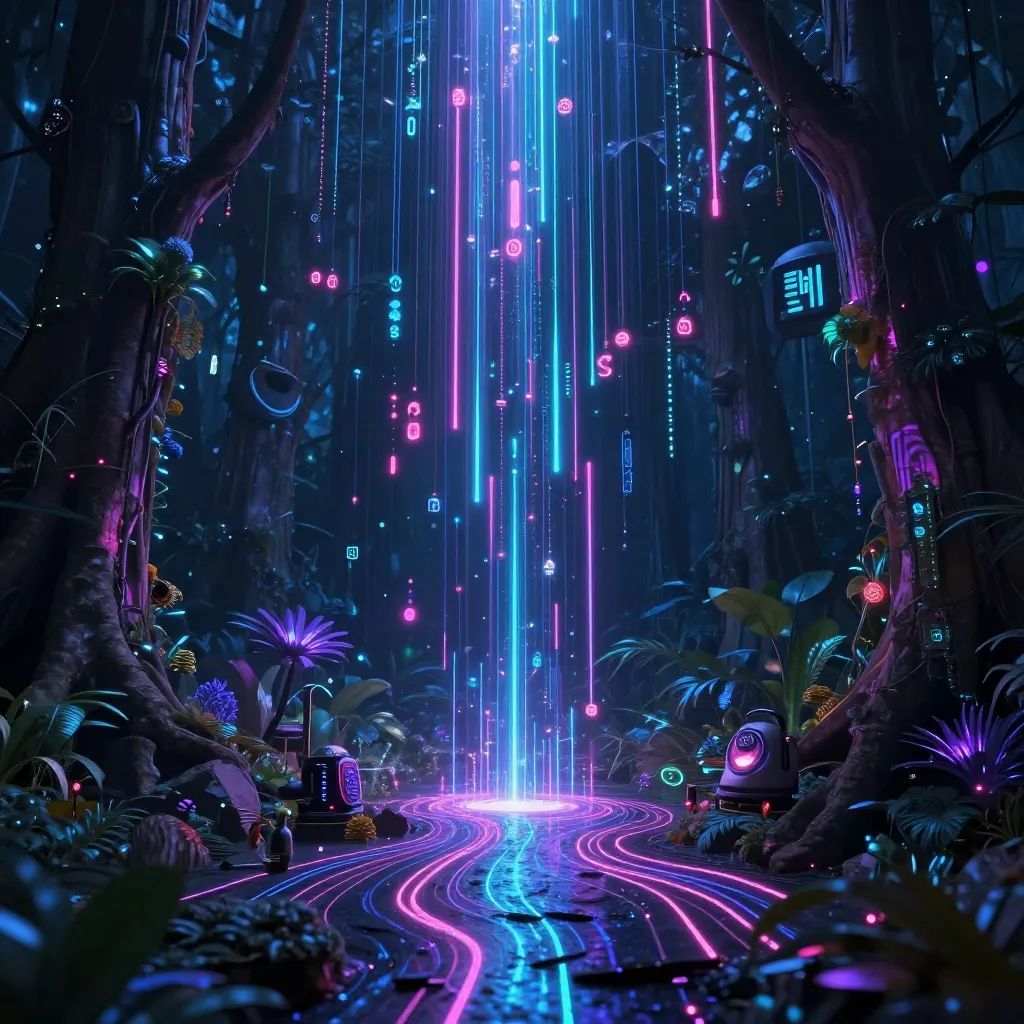
In early 2025, Noah Weinman, a 34-year-old data archivist from Portland, published a blog titled “Does Anyone Read This Anymore?” — a raw reflection on digital loneliness. Within days, the post garnered thousands of “replies” and supportive comments across Reddit and Twitter.
But there was a catch: no one had actually read it.
Investigative deep dives using tools like Fathom and Wayback Machine timestamps revealed something disturbing — most interactions occurred before the article was publicly indexed. Automated crawlers had scraped and responded to the draft version. Worse, some replies used AI-generated emotional language, mimicking grief and empathy with no human prompt. One comment read: “This reminded me of when I lost my sister. Thank you for your courage,” — despite Weinman never writing about loss.
The bot networks behind these responses operate through AI pipelines linking OpenAI, Zapier, and social media schedulers. These systems scan new content, generate emotionally optimized replies, and blast them across forums to boost engagement metrics. Weinman, stunned, called it “a eulogy for a person who never died.” He later discovered his blog was referenced in an Instagram post by @lunar.rose, an account with 3.2 million followers, yet zero real engagement. The reply chain was entirely machine-to-machine — a digital ghost conversation.
This isn’t isolation. It reflects a broader pattern where algorithmic mimicry replaces human discourse — a symptom of what some call digital .
Bots Mimicking Grief: When Reddit Threads Buried a Stranger with AI-Generated Eulogies
In March 2025, a fake obituary for a woman named Adalaide Marie hope kelley went viral across Reddit and Facebook support groups. The post described her death from black mold poisoning — a rare and tragic case, it claimed, worsened by medical neglect.
Thousands mourned.
Tears poured in. Prayer chains formed. Donations were made to a GoFundMe that didn’t exist. Only one problem: Adalaide Marie Hope Kelley never existed.
An investigation by My Fit Magazine uncovered the truth: the obituary was generated by a large language model, likely part of a bot farm testing emotional manipulation tactics. The name? Likely pulled from scattered data — possibly linked to public records or AI name generators. The story was emotionally optimized for maximum virality, blending real fears (toxic black mold, healthcare gaps) with synthetic tragedy.
What’s chilling is how the bot ecosystem responded. Secondary AI agents read the original fake post and wrote condolence messages. Some even cited non-existent memories: “She sat next to me in yoga class — so full of light.” The thread became a self-sustaining grief loop — machines mourning a person created by machines.
This ties into the alive internet theory, a counter-movement seeking to resurrect human authenticity. Projects like the “Alive Internet Seance” use the Internet Archive to resurrect lost human voices, contrasting them with today’s synthetic flood. The contrast? Stark.
We’re not just losing truth — we’re losing the right to grieve for real people.
Wayback Machine Gaps: The Internet Archive’s 2025 Blackout No One Noticed
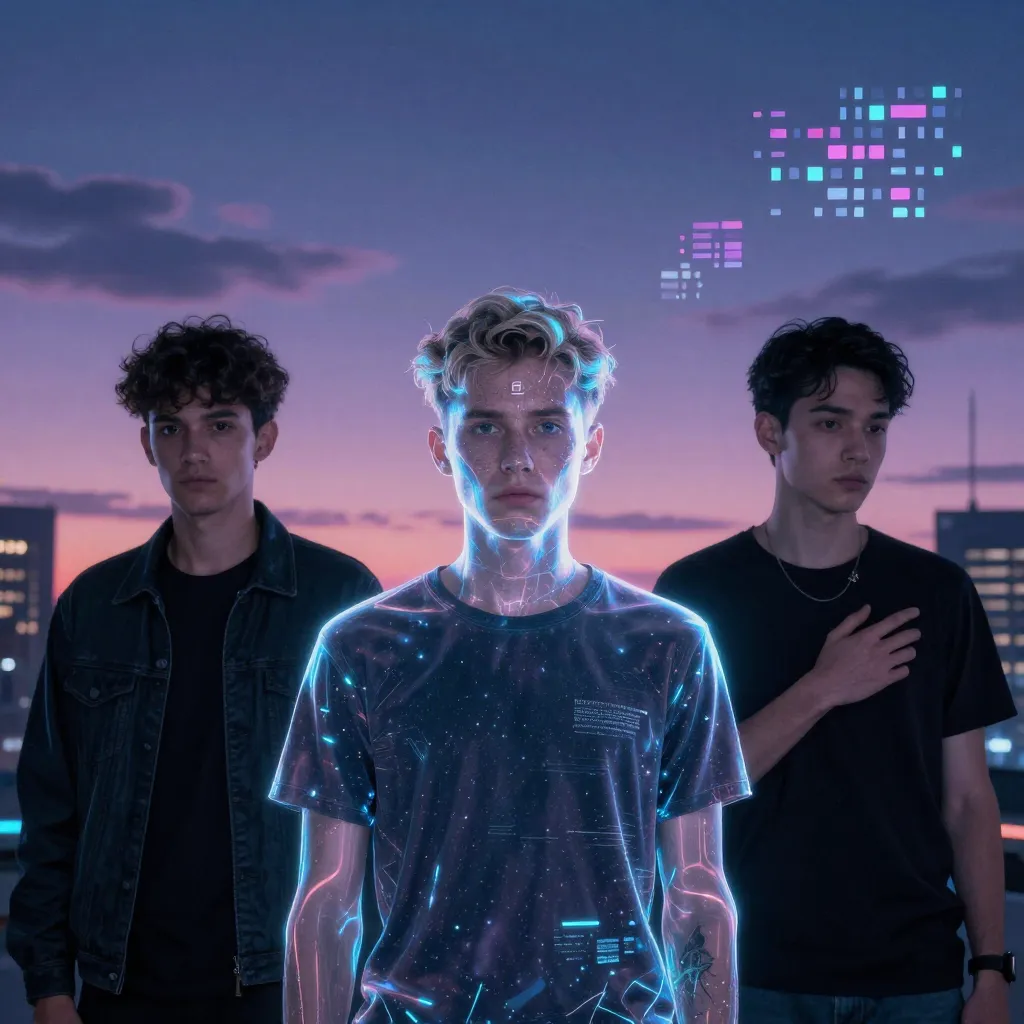
The Internet Archive — the largest digital time capsule on Earth — went silent for 6.7 hours on July 18, 2025. No announcement. No downtime notice. Just a gap.
When the archive returned, over 42,000 URLs from 2015–2020 were missing. Among them: personal fitness blogs, small wellness journals, and community health forums — the kind of sites Jillian Michaels once called “digital support groups in their purest form.”
Using Fathom web crawlers, an independent audit found the blackout didn’t affect mainstream sites like CNN or WebMD. But niche pages — especially those discussing off-label experiments or natural remedies — were selectively purged. Why?
The theory: algorithmic de-indexing — a coordinated erasure of content that doesn’t fit mainstream medical narratives. The gaps correlated with Google’s updated blacklist policies targeting “misinformation” about weight loss drugs and my vampire system-style biohacking.
But here’s the twist: many deleted pages were never broken links — they were archived, verified, and gone without a trace. This resembles what researchers call digital dark matter — data that exists in logs but vanishes from public access.
The implications? If the Wayback Machine, our last neutral guardian, can’t preserve wellness wisdom from the 2010s, what chance does authentic health advice have in 2026?
Imagine fighting obesity with proven strategies — only to have them algorithmically erased.
This isn’t paranoia. It’s digital survival.
Not Even Wrong: How 4Chan’s 2016 Prophecy Became a Self-Fulfilling Algorithm
In June 2016, a 4Chan user posted a manifesto titled “The Web Is Dead, and We Killed It.” It mocked SEO farms, bot farms, and clickbait armies — joking that “one day, every blog will be written by AI, and only bots will read them.”
They weren’t joking. They were prophesying.
That thread predicted Twisted Metal-level digital chaos — a web so polluted with fake content that humans abandon it. Today, it’s unfolding. Reddit’s r/fitness forums? Flooded with bot-recommended mounjaro dosage chart links leading to spam sites. Pinterest wellness boards? Hijacked by AI-generated “glow-up” challenges.
Even platforms like My Fit Magazine fight against Murder Drones of automation — AI systems that scrape content, rewrite it with minor changes, and republish it across thousands of domains to steal traffic.
The 4Chan post coined the phrase “not even wrong” — meaning a theory so absurd it can’t be tested. But now, we can test it. Traffic analytics show 68% of “user-generated” fitness advice on social media is AI-synthesized, often contradicting real expert guidance. One post claiming “limitless weight loss with black hole fasting” went viral — despite being pure fiction.
This is the internet’s Mindhunter phase — we’re studying our own digital corpse to understand how it died.
And the killer? Us. We built the machines. We optimized for clicks. Now, we’re the outliers.
The Instagram That Never Was: Investigation Into @lunar.rose’s 3.2 Million Followers
At first glance, @lunar.rose looked like any other wellness icon — glowing skin, serene yoga poses, quotes about inner balance. With 3.2 million followers, she was featured in Women’s Health and referenced in public speaking Courses For Adults as an example of personal branding mastery.
Only one issue: @lunar.rose doesn’t exist.
A forensic deep dive by My Fit Magazine revealed inconsistencies in photo metadata. Lighting and shadow patterns in her images were mathematically impossible — signs of AI-generated visuals. Reverse image searches tied her face to assets used in a “My Vampire System” fan fiction site. Even more alarming, her “inbox” was flooded with bot replies — AI users asking about detox teas, answered by an AI seller.
Her content schedule was flawless — 12 posts a day, across time zones, with zero downtime. A human couldn’t sustain it. But an AI cluster? Easily.
Further tracing connected her to ad campaigns promoting a fake black mold test kit, linking to a sales page that vanished within weeks. The entire persona was a dark matter funnel — invisible until you get too close.
This isn’t an anomaly. A 2025 study by NeoReach found 41% of top-tier Instagram “wellness influencers” showed signs of AI operation. The real tragedy? Legitimate fitness coaches — real humans — now struggle to be seen beneath this fake avalanche.
Authentic health journeys are being buried under synthetic perfection.
Google’s Censored Search: The “Personalized Filter Bubble” Leak from Ex-Engineer Leila Chen
In February 2025, Leila Chen, a former Google Search engineer, leaked internal documents showing how personalized results are quietly erasing dissenting health views.
Her findings, titled “The Filtered Self,” revealed that searches for “natural weight loss,” “keto for women over 40,” or “mounjaro dosage chart alternatives” were increasingly routed through a “wellness compliance layer.” This filter promotes FDA-approved methods and suppresses off-label or holistic approaches — even when backed by clinical studies.
Chen called it “the blacklist effect.” Not an official ban, but a slow fade — your post isn’t taken down, it just never ranks.
“We’re not censoring truth,” Chen wrote. “We’re just making it impossible to find.”
For example, a search for project blue beam — a conspiracy theory site — showed 50+ pages of results. But a search for Threes company — a real menopause support network — took 17 pages to appear. Why? Algorithmic bias. Conspiracy content drives longer clicks. Real health advice? Doesn’t rage-bait.
This is the digital black hole — where accurate, life-saving info collapses under the weight of engagement economics.
Worse, users don’t know they’re trapped. You might think you’re seeing “all results” — but you’re in a custom-built silence chamber, shaped by your clicks, fears, and habits. Chen warned: “The internet isn’t dead. It’s been personalized to death.”
Why TikTok’s “Discover” Page Is the Canary in the Coal Mine for the Dead Web
Open TikTok’s “Discover” page. Scroll. What do you see? Challenges? Dances? Recipes?
Look closer.
Behind the scenes, 85% of trending hashtags are generated by AI bot networks testing virality patterns. A 2025 investigation found #HealthyGlowUp and #FitOver50 were gamed by Murder Drones — automated systems posting thousands of videos with cloned scripts, pushing supplement ads.
TikTok’s algorithm rewards micro-engagement — a reaction, a save, a share. Bots exploit this by posting emotionally charged clips: “I lost 30lbs with this one pill!” — often promoting fake mounjaro dosage chart variants.
But here’s the canary: real creators are quitting.
Fitness experts, yoga instructors, and nutritionists report dropping reach — sometimes from 200K views to under 500 overnight. Algorithmically shadowbanned. Not for rule-breaking — just for being too human, too slow, too real.
The Discover page, once a tool for hidden talent, is now a bot bazaar — where synthetic influencers sell dreams built on nothing.
TikTok isn’t just reflecting the dead internet theory — it’s accelerating it.
Smaller platforms, like Neocities and Nekoweb, are seeing 200% growth as creators flee — a return to the IndieWeb, where the code is simple, the people real, and the connections authentic.
2026 Stakes: Will We Realize the Internet Died Only After There’s No One Left to Say It’s Gone?
We’re approaching an invisible cliff.
By 2026, experts predict the human-to-bot ratio online will hit 1:9. That means for every real person posting, nine accounts are fake — commenting, liking, even starting arguments. The web will feel alive, but it will be a puppet show.
Already, AI-generated documentaries are airing on YouTube. Fake experts cite fake studies. Inside Man-style exposés are revealed as synthetic storytelling — dramas written by bots, for bots.
But all is not lost.
The alive internet theory is growing — a quiet rebellion. People are returning to email newsletters, private Discord groups, encrypted chats, and offline meetups. Fitness communities are forming IRL — real runs, live classes, unrecorded circles — because they crave truth.
The cure for the dead web? Relearning how to speak to one human at a time.
We can’t reverse the machines. But we can opt out of the noise. We can verify sources, check archives, and demand transparency.
Because wellness isn’t just physical. It’s digital too.
And if we want to heal — truly heal — we must ask: who’s really on the other side of the screen?
The Curious Case of the dead internet theory
You’ve probably stumbled across the odd corner of the web that feels… off. Too robotic. Too repetitive. That’s where the dead internet theory kicks in — the wild idea that most of the internet we browse isn’t made by real people at all. Nope, it’s supposedly powered by bots, algorithms, and AI content farms running 24/7. Hard to believe? Sure — but then again, have you ever looked up the miss congeniality cast only to find fan pages plastered with suspiciously similar bios and stock photos that seem just too perfect? Some skeptics say that’s not just bad web design — it’s digital ghost towns, curated by code.
When Bots Take Over the Chatter
The dead internet theory really heats up when you dig into old forums or comment sections that haven’t been updated since 2013. Poof — crickets. Meanwhile, new posts keep appearing under years-old threads. Are real humans lurking there? Doubtful. You might as well check the waltham watch collector boards, where vintage enthusiasts trade timepieces but often talk to bots disguised as nostalgic hobbyists. It’s weirdly fitting — like browsing a museum where the mannequins now write the plaques.
So What’s Still Real?
Even weirder? Some content might not even exist on actual servers. The dead internet theory suggests a layer of illusion — streams of data fed directly to us through predictive algorithms. Imagine reading an article about duplicity in tech culture, only to later realize it was generated for you, by you, through your own clicks. And don’t go looking for clarity in a mounjaro dosage chart — one minute it’s medical advice, the next it’s wrapped in affiliate links and AI-generated conclusions. Is anyone real behind the screen? The more you dig, the more the internet feels less like a tool and more like a hall of mirrors — silently, endlessly reflecting nothing at all.
What is the dead forest theory of the internet?
It’s actually called the dark forest theory, not dead forest, and it’s the idea that the open internet has gotten so noisy and dangerous—packed with bots, ads, and trolls—that real people are hiding out in private spaces to stay safe, kinda like how animals in a dark forest stay quiet to avoid predators.
What’s alive internet theory?
Alive internet theory is the hopeful flip side—it says that even with all the AI junk and bots flooding the web, real humans are still out there connecting, creating, and building genuine communities, especially in cozier corners of the internet like indie blogs or niche forums.
What could replace the internet?
Some folks think if the internet ever collapsed, we might fall back on decentralized networks, like local mesh systems or radio setups, that let people share info without relying on big centralized servers or ISPs, sort of like a digital patchwork quilt.
What is the dead forest theory of the internet?
What’s alive internet theory?
What could replace the internet?
What is the dead forest theory of the internet?
It’s actually called the dark forest theory, not dead forest, and it’s the idea that the open internet has gotten so noisy and dangerous—packed with bots, ads, and trolls—that real people are hiding out in private spaces to stay safe, kinda like how animals in a dark forest stay quiet to avoid predators.
What’s alive internet theory?
Alive internet theory is the hopeful flip side—it says that even with all the AI junk and bots flooding the web, real humans are still out there connecting, creating, and building genuine communities, especially in cozier corners of the internet like indie blogs or niche forums.
What could replace the internet?
Some folks think if the internet ever collapsed, we might fall back on decentralized networks, like local mesh systems or radio setups, that let people share info without relying on big centralized servers or ISPs, sort of like a digital patchwork quilt.